






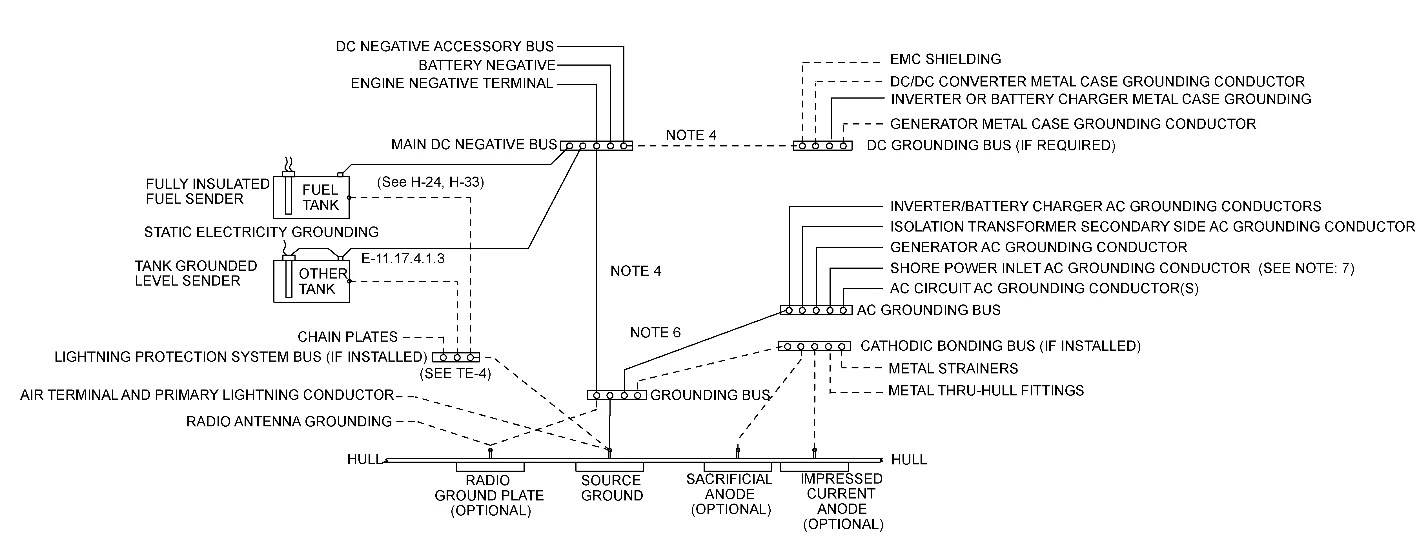
Cathodic bonding is one of those boat systems that often gets misunderstood. Many people have heard the term, but there is still a lot of confusion about what it actually does, whether it is required, and how it should be installed.
In this post I’ll try to explain what cathodic bonding is, the basic requirements, whether it’s required or not, and touch on some relevant points from the 2025 revision of the ABYC E-2, Cathodic Protection standard.
What is Cathodic Bonding?
Simply put, cathodic bonding is the electrical interconnection of metal objects in common contact with water, to the grounding bus, and to the source of cathodic protection.
In most boats, that source of protection is a sacrificial anode—typically zinc, aluminum, or magnesium.
The main purpose of the bonding system is to make sure that all metal components that are sharing the same electrolyte (the surrounding water) are electrically connected so they can receive protection from the anodes. All metals that are to receive cathodic protection from the cathodic protection system must have a maximum resistance of one ohm to the cathodic bonding system anode.
Is Cathodic Bonding Required?
This is one area where people often get confused.
Cathodic protection itself is not required by ABYC standards. But if a boat does have a cathodic protection system installed, then that system must comply with the requirements of ABYC E-2.
This is an example of “if installed” requirement. In other words, the system may be optional but if it’s there, it needs to meet the standard.
Basic System Requirements
The E-2 standard outlines several key requirements for how cathodic bonding systems should be installed.
Parallel Connections:
Each underwater metal component that is protected by a cathodic protection system must be wired in parallel with a single connection to the cathodic bonding system.
The bonding buses themselves, however, may be wired in series.
Bonding Conductors:
The bonding conductors must be made from materials that hold up in the marine environment. The standard specifies that they should be:
- Oil-resistant, insulated, tinned, stranded copper wire, or
- Uninsulated copper strip
Copper braid and copper tubing are not allowed for cathodic bonding conductors.
Minimum Conductor Size:
When wire is used as the bonding conductor, the minimum size must be #8 AWG or larger.
If the bonding conductor is also serving as part of the lightning protection system, the conductor must be at least the equivalent of #6 AWG.
Cathodic bonding isn’t complicated, and it is an important part of protecting underwater metals on a boat. While the system itself is not required, any installed cathodic protection system must meet the ABYC E-2 requirements. For more information, refer to the ABYC E-2 or contact ABYC Standards and Compliance Department.
Contributed by Maciej Rynkiewicz, ABYC Standards Developer