






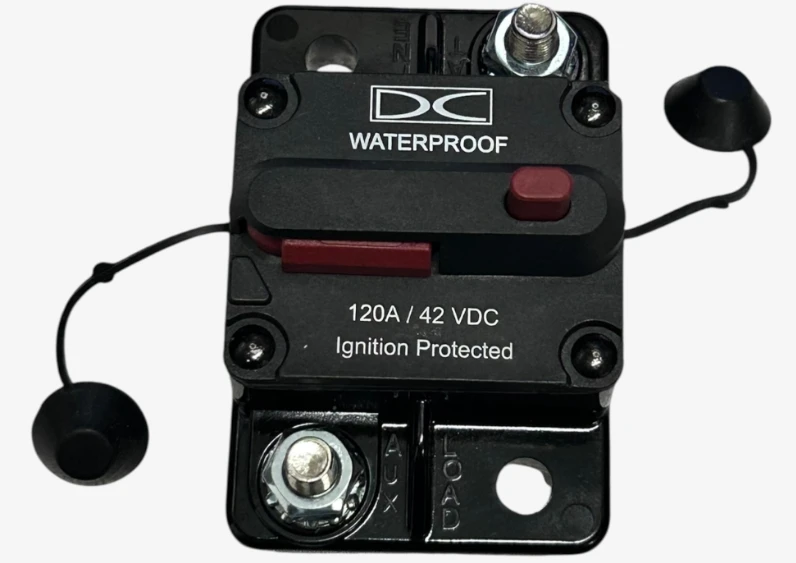
When working around gasoline, LPG, or CNG systems on a boat, one detail matters a lot: whether an electrical component is ignition protected.
In simple terms, ignition protection means a device will not ignite a surrounding flammable hydrocarbon mixture under normal operating condition. That can mean the device contains an internal ignition event, limits electrical or thermal energy required for ignition, or hermetically seals the ignition source so vapors cannot be ignited.
What counts as an ignition source?
An ignition source is any component that can create enough energy to ignite a flammable mixture. Examples include arcing contacts, commutators, brush assemblies, collector rings, hot resistors, or materials that can strike together and spark.
How do you confirm a component is ignition protected?
Look for recognized markings such as:
- “Ignition Protected”
- “C-1500 Marine-Ignition Protected”
- “UL 1500 Marine-Ignition Protected”
- “ISO 8846 MARINE”
- “SAE J1171 MARINE”
Common test standards include ABYC C-1500, UL 1500, SAE J1171, and ISO 8846.* These markings and standards help confirm that the component was evaluated for use around potentially flammable vapors.
Where does ignition protection matter most?
Per ABYC E-11.5.1.4, potential ignition sources in spaces with gasoline (petrol) powered machinery, gasoline (petrol) fuel tanks, or fittings and other connections in the gasoline (petrol) fuel system are required to be ignition protected unless isolated from the gasoline fuel source.
The same concept applies to LPG and CNG installations: electrical ignition sources in compartments containing appliances, cylinders, fittings, valves, or regulators must be evaluated against the applicable ABYC standards (A1, and A-22).
Key Takeaway
If a device can arc, spark, or get hot enough to ignite vapors, do not assume it is safe for that space. The ignition protection requirement applies whether manual or automatic operation is needed to activate a device that serves as an ignition source, including switches, receptacles, circuit breakers, and similar components. Verify the installation location, check the component markings, and confirm the standard it was tested to.
Ignition protection is a small marking with a big purpose: helping reduce fires and explosions. When in doubt, refer to the applicable ABYC standard or contact the ABYC Standards and Compliance Department for guidance.
Contributed by Maciej Rynkiewicz, ABYC Standards Developer
*Test standards to determine ignition protection include ABYC C-1500, Ignition Protection Test Methods for Marine Products; UL 1500, Ignition-Protection Test for Marine Products; SAE J1171, External Ignition Protection of Marine Electrical Devices; ISO 8846, Small Craft — Electrical Devices — Protection Against Ignition of Surrounding Flammable Gases.